People-Centered Care Episode 2: A Global Conversation on Humanizing Healthcare
By: Irene Raidis Intog, RN
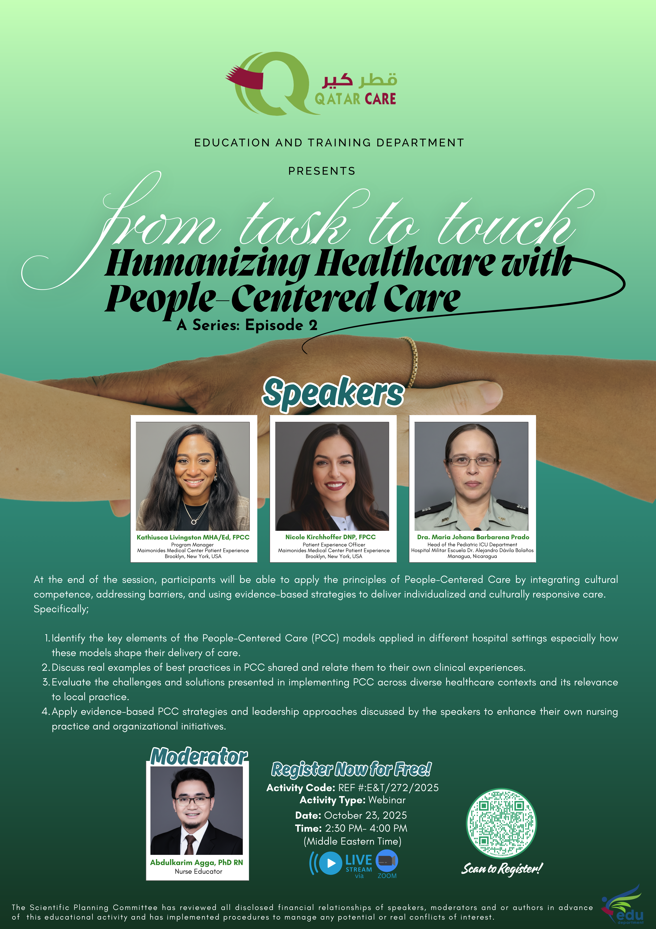
Qatar Care’s Education and Training Department continued its commitment to advancing compassionate, evidence-based nursing practice through Episode 2 of the People-Centered Care series. Held on October 23, 2025, the session brought together international voices who shared practical strategies and lived experiences on how healthcare professionals can embed empathy, cultural respect, and individualized care into everyday practice.
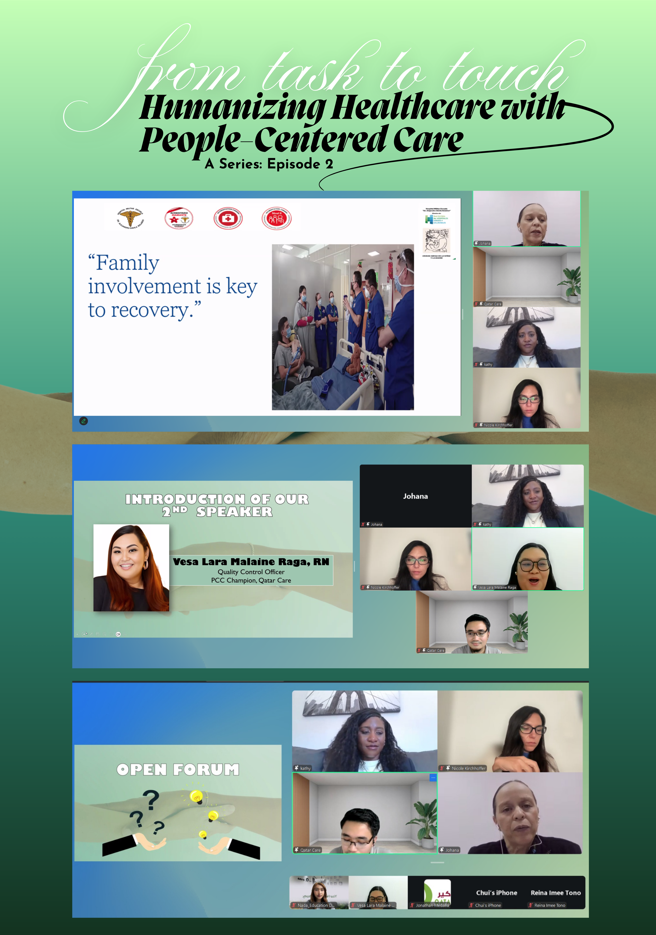
Moderated by Dr. Abdulkarim Agga, PhD RN, the episode drew participants from across the region who were eager to deepen their understanding of People-Centered Care (PCC). The focus of the session was clear: translate the concept of PCC into real, actionable behaviors that improve patient outcomes and create a more humane healthcare experience.
The episode featured three distinguished speakers. Nicole Kirchhoffer, DNP, FPCC and Kathiusca Livingston, MHA/Ed, FPCC, both leaders in patient experience at Maimonides Medical Center in New York, offered an American perspective grounded in structured PCC models and organizational transformation. They highlighted how cultural humility, communication, and frontline empowerment shape their patient experience programs. Their examples showed how PCC is not merely a philosophy but a systematic approach strengthened by continuous education, leadership commitment, and accountability.
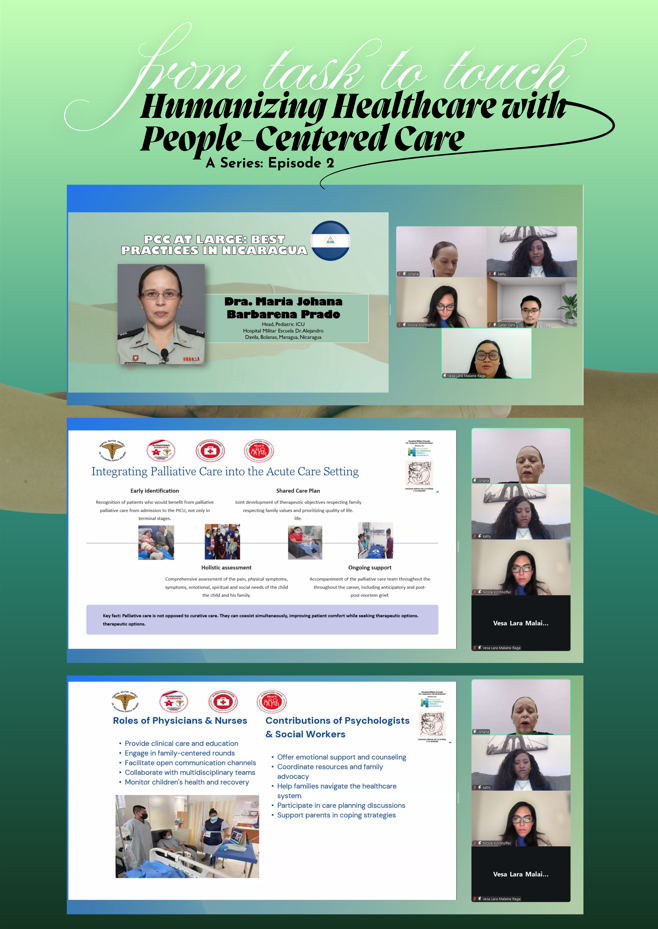
From Nicaragua, Dr. Maria Johana Barbarena Prado, Head of the Pediatric ICU at Hospital Militar Escuela Dr. Alejandro Dávila Bolaños, provided powerful insights drawn from critical care. She painted a picture of how PCC principles play out in high-stakes environments, where families face fear, uncertainty, and emotional strain. Her stories underscored the importance of trust-building, family engagement, and respect for cultural contexts in delivering safe and compassionate care.
Throughout the webinar, participants were encouraged to examine the application of PCC in their own settings. The discussion highlighted several takeaways. First, PCC models are adaptable across diverse healthcare contexts. While systems may differ, the core principles remain universal. Second, best practices flourish when clinicians value the patient’s voice, integrate cultural competence, and maintain a commitment to individualized care. Third, challenges such as communication gaps, staffing limitations, and cultural barriers can be mitigated through teamwork, leadership support, and evidence-based strategies.
By the end of the session, attendees reported a renewed appreciation for PCC as both a mindset and a skillset. They explored real-world solutions to common barriers, gained exposure to global perspectives, and learned how simple actions can profoundly improve patient and family experience. The activity also reinforced the crucial role of nurses as advocates, educators, and partners in care.
Episode 2 served as a reminder that humanizing healthcare does not require grand gestures. It starts with presence, respect, and an intentional effort to understand each patient’s story. Through meaningful dialogues and shared experiences, the People-Centered Care series continues to inspire healthcare workers to lead with compassion and uphold the dignity of every individual they serve.